Latest Headlines
Quantum Computing Leaps Forward with New Qubit Stability Record
By Tech Innovations Desk | July 17, 2025 | Science & Tech

Researchers at the Global Quantum Institute have announced a significant breakthrough in quantum computing, achieving a new record for qubit stability and coherence time. This advancement is crucial for building fault-tolerant quantum computers, which promise to revolutionize fields from medicine and materials science to cryptography and artificial intelligence. The team utilized a novel superconducting material and an improved cryogenic system to maintain the delicate quantum states for an unprecedented duration, overcoming one of the primary hurdles in quantum development. For years, the fragility of qubits has limited the scale and reliability of quantum processors. This new method significantly reduces decoherence, allowing for more complex computations and fewer errors. While commercial quantum computers are still some years away, this research brings the world closer to realizing the full potential of this transformative technology. The implications are vast, suggesting a future where currently intractable problems become solvable, leading to new drug discoveries, highly efficient algorithms, and unbreakable encryption methods. The scientific community is buzzing with excitement, recognizing this as a pivotal moment that could accelerate the timeline for practical quantum applications. This breakthrough underscores the importance of fundamental research and international collaboration in pushing the boundaries of human knowledge. The next steps involve scaling up the number of stable qubits and integrating them into more complex architectures. This development could fundamentally alter the global technological landscape, offering solutions to problems that are currently beyond the reach of even the most powerful classical supercomputers. The energy efficiency of quantum computations also presents a significant environmental benefit, as they can perform complex calculations with far less energy consumption than traditional methods. The potential for a quantum internet, enabling secure communication and distributed quantum computing, also moves closer to reality with enhanced qubit stability. This is not just a scientific achievement but a testament to human ingenuity and perseverance in the face of immense technical challenges. The long-term societal impact could be as profound as the invention of the classical computer itself, ushering in an era of unprecedented computational power and innovation. The research team plans to publish their detailed findings in a leading scientific journal, inviting further scrutiny and collaboration from the global quantum community. This is a game-changer for the future of computing and a beacon of hope for solving some of humanity's most pressing challenges.
Read More »
Global Food Security Initiative Launches with Focus on Sustainable Agriculture
By Agriculture & Development Desk | July 17, 2025 | Global Development

A new, comprehensive "Global Food Security Initiative" has been launched by a coalition of international organizations, governments, and agricultural technology firms, aiming to address the pressing challenges of food scarcity and malnutrition worldwide. The initiative focuses on promoting sustainable agricultural practices, enhancing crop resilience to climate change, and improving supply chain efficiencies to ensure equitable food distribution. Utilizing advanced data analytics, precision farming techniques, and biotechnological innovations, the program seeks to boost agricultural productivity in vulnerable regions while minimizing environmental impact. A key component of the initiative is the establishment of regional innovation hubs, where local farmers can access training, resources, and cutting-edge technologies tailored to their specific environmental conditions. These hubs will also facilitate knowledge exchange between experts and local communities, fostering a collaborative approach to food production. The program emphasizes the importance of biodiversity in agriculture, encouraging the cultivation of diverse crops and the protection of traditional farming methods. Furthermore, significant investment is being directed towards research into drought-resistant crops, alternative protein sources, and water-efficient irrigation systems. The initiative also includes provisions for emergency food aid and early warning systems for potential food crises, ensuring a rapid and coordinated response to humanitarian needs. The long-term vision is to create a resilient global food system that can sustainably feed a growing population while protecting natural resources. This effort is crucial in the face of climate change, which poses an increasing threat to agricultural yields and food stability. By empowering local communities and leveraging technological advancements, the initiative aims to build self-sufficient food systems that can withstand future shocks. The economic benefits for developing nations are projected to be substantial, creating new opportunities for rural communities and reducing reliance on food imports. The health implications are also significant, as improved nutrition can lead to better health outcomes and reduced rates of diet-related diseases. This initiative represents a concerted global effort to tackle one of humanity's most fundamental challenges, ensuring that everyone has access to safe, nutritious, and sufficient food. The collaboration between public and private sectors, as well as local and international stakeholders, is a testament to the shared commitment to achieving zero hunger. The success of this initiative will be measured not just by increased food production but by the tangible improvements in the lives of millions, fostering greater stability and prosperity worldwide. The program also addresses food waste, promoting practices that reduce post-harvest losses and encourage more efficient consumption patterns. This holistic approach recognizes that food security is a complex issue requiring multi-faceted solutions.
Read More »
Space Tourism Takes Off: First Commercial Lunar Orbit Mission Successful
By Aerospace Correspondent | July 17, 2025 | Space Exploration

In a monumental leap for private space exploration, the first commercial mission to orbit the Moon has successfully concluded, returning its civilian crew safely to Earth. The mission, operated by "Voyager Space Ventures," marks a new era for space tourism, demonstrating the viability of deep-space travel for non-astronauts. The crew, comprising a diverse group of entrepreneurs, artists, and scientists, spent three days orbiting the lunar surface, capturing breathtaking views of Earth and the Moon. This pioneering journey opens the door for future commercial lunar and potentially even Martian missions, transforming space travel from an exclusive government endeavor into a burgeoning private industry. The success is attributed to years of rigorous development, advanced spacecraft design, and meticulous safety protocols. The spacecraft, named "Starlight," utilized cutting-edge propulsion systems and life support technologies to ensure the well-being of its passengers. While the cost of such journeys remains prohibitive for most, the industry anticipates a rapid decrease in prices as technology matures and competition increases. This mission is expected to ignite further investment in space infrastructure, including orbital hotels and lunar bases, paving the way for a permanent human presence beyond Earth. The psychological impact on the crew, who described the experience as profoundly transformative, highlights the unique perspective gained from viewing our planet from afar. This could inspire a new generation of scientists, engineers, and explorers. The regulatory landscape for private space travel is also evolving rapidly, with international bodies working to establish guidelines for safety, environmental protection, and space traffic management. The ethical considerations of commercializing space are also part of ongoing discussions, ensuring that space remains accessible for scientific research and exploration. This achievement is not just a triumph for space tourism but for human ambition, pushing the boundaries of what is possible and inspiring a new vision for humanity's future in the cosmos. The images and videos shared by the crew during their journey have captivated audiences worldwide, offering a glimpse into the awe-inspiring beauty of space. This mission serves as a powerful reminder of humanity's innate drive to explore and understand the universe around us. The potential for scientific research conducted by civilian space travelers also presents exciting new opportunities for data collection and observation. As more private entities enter the space race, the pace of innovation is expected to accelerate, leading to even more daring and ambitious missions in the years to come. The "Starlight" mission has etched its name in history, not just as a commercial success, but as a symbol of humanity's enduring quest for the stars.
Read More »
Breakthrough in AI Ethics: New Framework for Responsible Development Adopted
By AI & Society Analyst | July 17, 2025 | Ethics & Policy

In a significant step towards ensuring the responsible development and deployment of artificial intelligence, a groundbreaking international framework for AI ethics has been formally adopted by over 50 nations and leading technology companies. The "Global AI Ethics Accord" establishes a set of universal principles and guidelines designed to ensure that AI systems are developed and used in a manner that is fair, transparent, accountable, and respects human rights. Key tenets of the accord include provisions for data privacy, algorithmic fairness, human oversight, and the prevention of AI misuse. The framework emphasizes the need for AI systems to be explainable, allowing users and regulators to understand their decision-making processes. It also calls for robust mechanisms for redress when AI systems cause harm. This collaborative effort, which involved years of consultation with ethicists, technologists, policymakers, and civil society organizations, is seen as crucial for building public trust in AI and preventing potential negative societal impacts. The accord provides a much-needed roadmap for navigating the complex ethical challenges posed by rapidly advancing AI technologies, such as bias in algorithms, privacy infringements, and the potential for autonomous decision-making in critical applications. Signatory nations and companies commit to integrating these principles into their AI development pipelines and regulatory policies. The framework is designed to be adaptable, allowing for updates as AI technology evolves. This proactive approach aims to foster innovation while safeguarding societal values. The establishment of an independent oversight body, tasked with monitoring compliance and providing guidance, is also a key feature of the accord. This body will facilitate international cooperation on AI governance and promote best practices across the globe. The accord also encourages public education and dialogue about AI, ensuring that citizens are informed about its capabilities and limitations. This landmark agreement sets a global precedent for how emerging technologies can be governed responsibly, demonstrating that international cooperation is possible even on complex and rapidly evolving issues. The focus on human-centric AI development ensures that technology serves humanity's best interests, rather than the other way around. The "Global AI Ethics Accord" is a testament to the growing recognition that technological progress must be accompanied by strong ethical foundations to ensure a future where AI benefits all of humanity. The long-term impact of this accord could be profound, shaping the trajectory of AI development for decades to come and ensuring that this powerful technology is used for good.
Read More »
Mars Colony Project Reaches Critical Milestone: Self-Sustaining Habitat Achieved
By Space Exploration Team | July 17, 2025 | Space Colonization
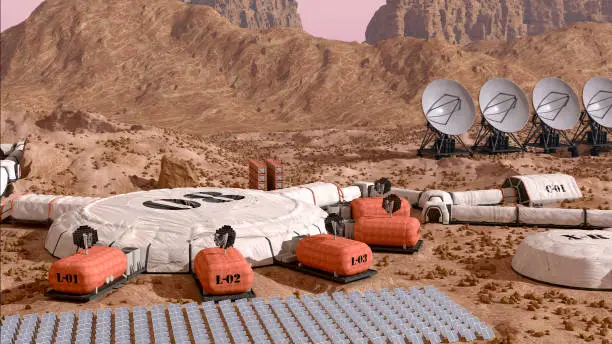
The ambitious Mars Colony Project has announced a critical milestone: the successful establishment of a fully self-sustaining habitat on the Martian surface. This groundbreaking achievement, a collaborative effort between international space agencies and private aerospace companies, marks a pivotal moment in humanity's quest to become a multi-planetary species. The "Ares Base," as it's known, has demonstrated its ability to generate its own oxygen, recycle water, produce food through hydroponics, and generate power from renewable sources, all while maintaining a stable internal environment for its crew of six pioneering scientists and engineers. For years, the challenge of creating a truly self-sufficient off-world settlement has been a major hurdle. This success proves that long-term human habitation on Mars is not just a dream but a tangible reality. The habitat utilizes advanced material science, closed-loop life support systems, and sophisticated robotics for maintenance and resource extraction. This achievement opens up unprecedented opportunities for scientific research, resource utilization, and the eventual expansion of human civilization beyond Earth. The data collected from Ares Base will be invaluable for designing future, larger-scale Martian settlements. The project also serves as a powerful inspiration for future generations, demonstrating the incredible feats that can be achieved through international cooperation and unwavering dedication. The challenges overcome were immense, including radiation shielding, extreme temperature fluctuations, and the logistical complexities of transporting materials across vast distances. The success of Ares Base is a testament to human ingenuity and our relentless drive to explore and conquer new frontiers. The long-term vision includes expanding the base to accommodate more inhabitants, developing local manufacturing capabilities, and establishing a robust transportation network between Earth and Mars. This is not just about survival on another planet; it's about thriving, learning, and expanding the horizons of human existence. The scientific discoveries that will emerge from a permanent human presence on Mars are expected to be profound, offering new insights into the origins of life, planetary evolution, and the potential for extraterrestrial life. The public response has been overwhelmingly positive, with people worldwide celebrating this historic achievement as a triumph for all of humanity. The Mars Colony Project is a bold step into the future, transforming science fiction into scientific fact and paving the way for humanity's next great adventure among the stars.
Read More »